

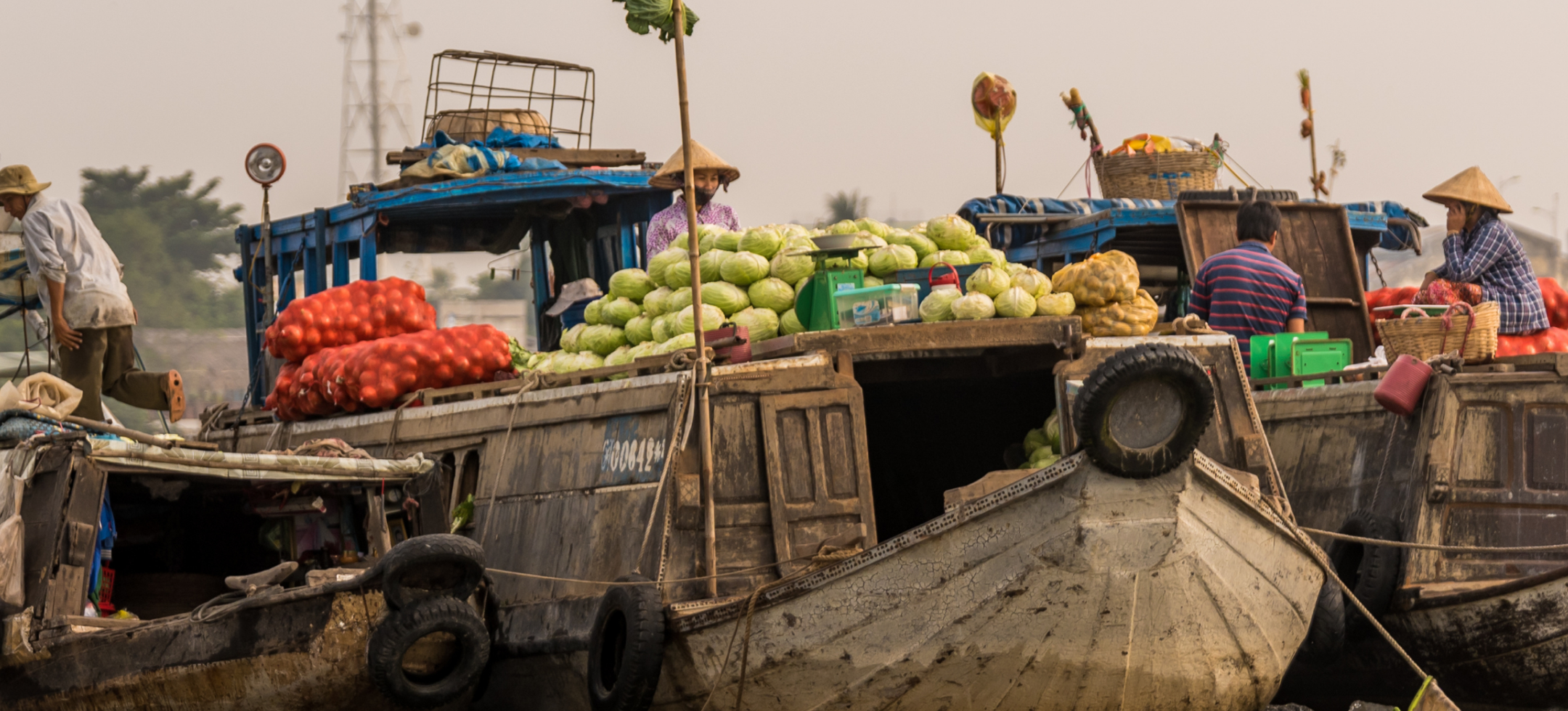
Best Hu Tieu in Saigon best morning and late eats

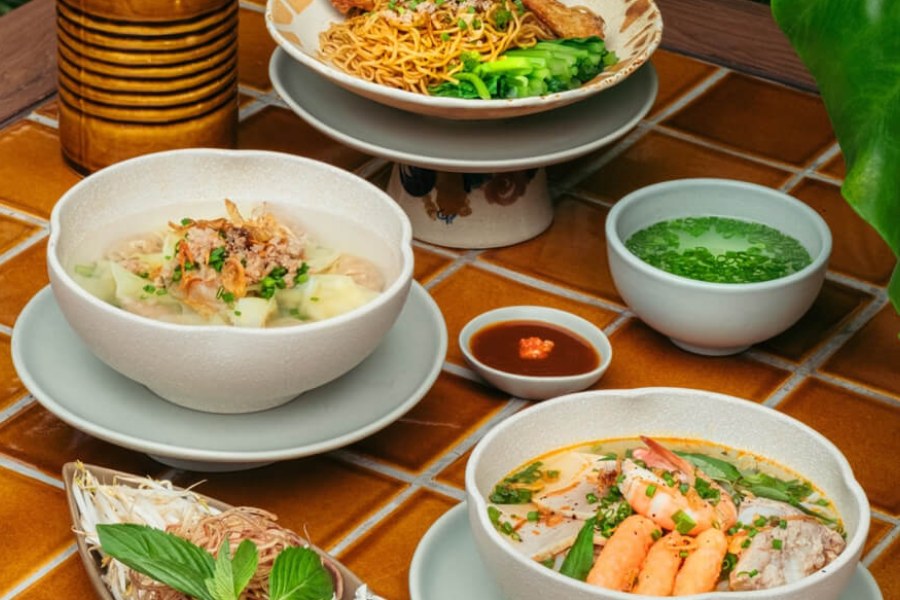
Among the many noodle dishes found across Ho Chi Minh City, the best hu tieu in Saigon stands out for its Southern character, flexible serving styles and multicultural roots. A bowl may arrive with clear broth or as dry noodles with soup served separately, while toppings can range from pork and shrimp to minced meat and quail egg. Nam Mê Kitchen & Bar approaches the dish as part of the wider Mekong food story, helping diners understand what makes hu tieu distinctive before exploring more regional flavors.
What makes hu tieu different from other Vietnamese noodles?
Hu tieu is defined by its Southern roots, characteristic noodle texture and a broth that is usually lighter and gently sweet rather than heavily spiced. Understanding these three elements makes it easier to distinguish the dish from pho or other Vietnamese noodle soups.
Why is the broth so important?
A good hu tieu broth should taste clear and layered rather than simply salty or sweet.
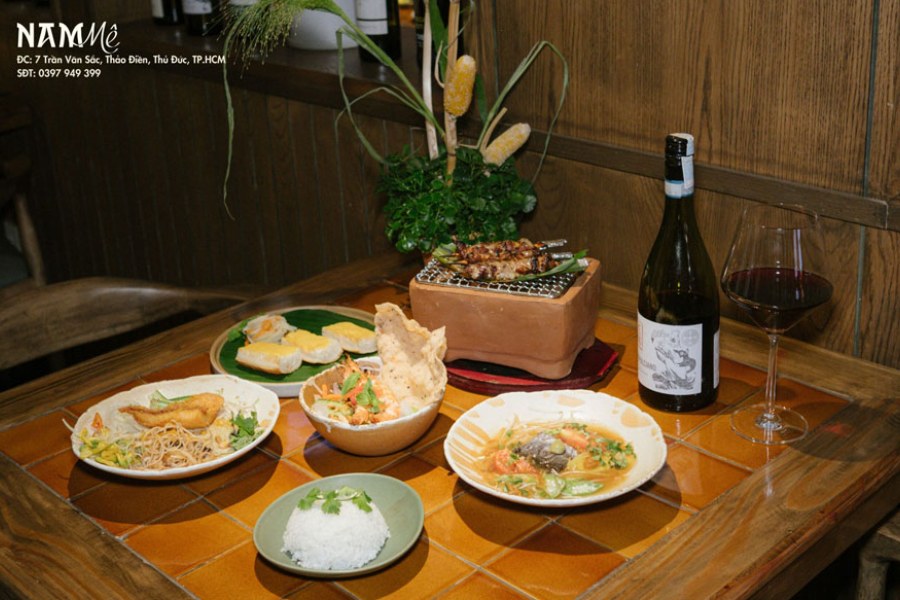
Savoring flavorful broth with tender pork bones
Pork bones commonly form the base, while dried seafood and vegetables can add depth. The result should support the noodles and toppings without covering their individual flavors.
For travelers building a broader morning itinerary, hu tieu also fits naturally among the choices explored in a guide to the best breakfast in Saigon.
What makes hu tieu noodles distinctive?
The noodles vary by regional style, so there is no single texture for every bowl. Some versions are springy and slightly translucent, while others are softer or made differently. What matters is that the noodles retain enough structure to work with either broth or sauce.
Why can the toppings vary so much?
Hu tieu reflects cultural exchange across Southern Vietnam and the Mekong region. Pork, minced pork, shrimp, quail egg, liver and other toppings may appear depending on the style and shop. That flexibility is part of the dish rather than a sign that there is one fixed recipe.
|
Hu tieu element |
What to notice |
Role in the bowl |
|---|---|---|
|
Noodles |
Springy or regionally distinctive |
Main texture |
|
Broth |
Clear, savory, gently sweet |
Connects the dish |
|
Pork |
Tender, well-seasoned |
Savory depth |
|
Shrimp |
Fresh, lightly cooked |
Sweetness and texture |
|
Herbs and greens |
Fresh and crisp |
Balance |
|
Fried garlic |
Fragrant |
Finishing aroma |
Which styles of hu tieu should you try in Saigon?
Three useful starting points are hu tieu Nam Vang, hu tieu My Tho and the choice between hu tieu nuoc and hu tieu kho. Each reveals a different side of Southern noodle culture, from cross-border influence to regional Mekong traditions.
What is hu tieu Nam Vang?
“Nam Vang” is the Vietnamese name associated with Phnom Penh, reflecting the Cambodian connection behind this style.
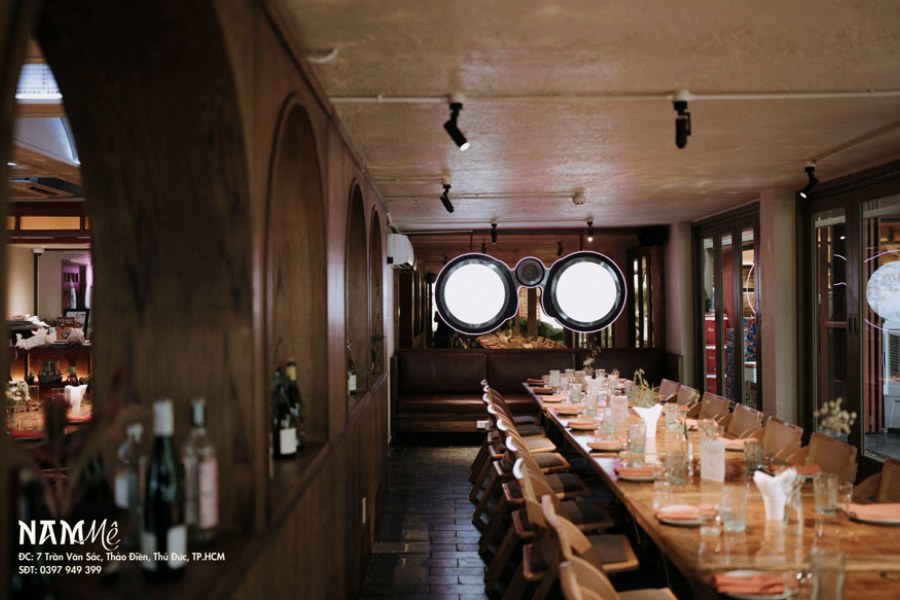
Warm wooden interior featuring long dining tables
In Saigon, bowls commonly combine clear broth with pork, minced meat, shrimp, quail egg and other toppings, creating more textural variety than a simple noodle soup.
What makes hu tieu My Tho different?
My Tho connects hu tieu directly with the Mekong Delta. The regional version is closely associated with local noodle-making traditions and a lighter Southern flavor profile. Trying it alongside a Saigon-style bowl helps show how one dish changes as it moves between places.
That regional diversity is similar to the way banh xeo in Ho Chi Minh City can lead diners toward a broader understanding of Southern Vietnamese food.
Should you order hu tieu kho or hu tieu nuoc?
Choose hu tieu nuoc when you want the broth and noodles together in every spoonful. Choose hu tieu kho when you prefer the noodles mixed with a concentrated sauce and the broth served separately. Neither format is inherently superior; they simply emphasize different parts of the dish.
How can you recognize a satisfying bowl of hu tieu?
Instead of judging a bowl by the number of toppings, focus on broth clarity, noodle texture and balance between protein, vegetables and seasoning. These elements reveal more about the dish than an oversized serving or an unusually elaborate presentation.
Should the broth taste very sweet?
A gentle sweetness is common in Southern cooking, but the broth should still have savory depth.
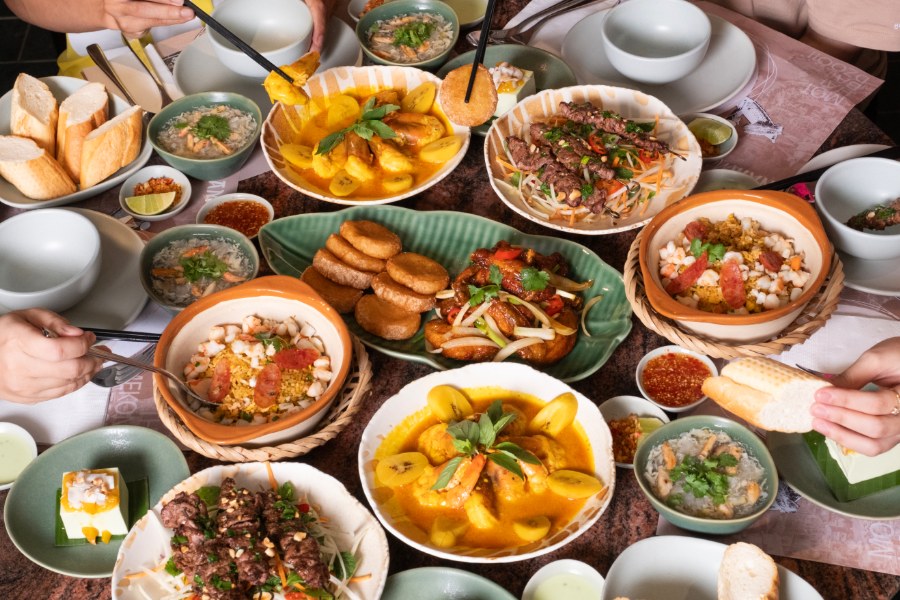
Enjoying a variety of delicious Mekong dishes
If sweetness overwhelms pork, seafood and aromatics, the bowl can lose balance. Taste the broth before adding lime, chili or other condiments.
Travelers who enjoy comparing Southern everyday foods can contrast hu tieu with com tam in Saigon, where balance comes from grilled pork, broken rice, pickles and fish sauce instead.
How should the noodles feel?
The noodles should remain pleasantly structured rather than becoming excessively soft while sitting in broth. Dry hu tieu makes texture particularly noticeable because sauce coats the noodles directly, so firmness becomes part of the eating experience.
Do more toppings make a better bowl?
Not necessarily. Extra pork, shrimp or offal can make the dish more substantial, but each topping should still contribute something distinct. A simpler bowl with fresh ingredients and well-made broth can be more satisfying than one overloaded with components.
When does hu tieu fit into a Saigon food journey?
Hu tieu works particularly well as a local breakfast, a practical lunch or one stop within a varied food itinerary. Its versatility means travelers do not need to reserve the dish for one specific time of day.
Is hu tieu mainly a breakfast dish?
Breakfast is a natural time to eat it because noodle shops can become active early and a warm bowl offers a complete start to the day. However, hu tieu is not restricted to the morning and is widely suitable for later meals as well.
Does hu tieu work for lunch?
Yes. Hu tieu provides noodles, protein, vegetables and broth without necessarily feeling as heavy as a large shared meal. Travelers deciding between several midday formats can compare it with other options in the best places to eat in Ho Chi Minh City.
What should you eat after hu tieu?
Use the next meal to create contrast. After a bowl of noodles, a shared dinner with grilled dishes, vegetables, wraps or regional specialties can show another side of Vietnamese dining. That transition is explored further in the best dinner in Ho Chi Minh.
What should first-time diners know about hu tieu?
First-time diners should understand the difference between dry and soup versions, the dish’s Southern–Mekong identity and the fact that recipes vary considerably between shops. Knowing this prevents one bowl from being treated as the universal definition of hu tieu.
Is hu tieu the same as pho?
No. Hu tieu is a distinct Southern noodle tradition, with different noodles, broth profiles, toppings and cultural roots. It should not be treated as simply another version of pho.
Is hu tieu connected to the Mekong Delta?
Yes. Hu tieu has strong connections with Southern Vietnam and the Mekong Delta, including regional styles associated with My Tho and Sa Dec. Its history also reflects Chinese and Cambodian culinary influences.
Does Nam Mê Kitchen & Bar currently serve hu tieu?
Nam Mê’s published content discusses hu tieu as part of Saigon and Southern Vietnamese food culture, but the current public menu information does not clearly confirm hu tieu as an available Nam Mê dish. It is therefore more accurate to connect the dish with Nam Mê’s broader Mekong story rather than claim current availability without verification.
Follow the Mekong Story Beyond One Bowl
Searching for the best hu tieu in Saigon opens a wider story than a single noodle shop. Nam Vang influences, Mekong Delta variations, dry noodles and clear-broth versions all show how food moves and changes across Southern Vietnam. Nam Mê Kitchen & Bar continues that spirit of exploration through a broader Vietnamese–Mekong dining concept.
After experiencing hu tieu in the city, diners can let the next meal explore another part of the river region through shared dishes, regional ingredients and different cooking traditions.
Nam Mê Kitchen & Bar – A Fun Taste of Mekong Cuisine
- Address: 07 Tran Van Sac Street (formerly Street No. 44), An Khanh Ward, Ho Chi Minh City
- Open Daily
- Monday to Friday: 8:00 AM – 2:00 PM, 5:00 PM – 10:30 PM (Closed from 2:00 PM to 5:00 PM)
- Saturday & Sunday: 8:00 AM – 10:30 PM
- Reservations: +84 39 794 9399

Chọn Mê kông là bến đỗ để tìm kiếm nguồn cảm hứng nguyên bản, Nam Mê làm bạn với người bản địa, hoà mình vào lối sống của miền sông nước, của những đồng bằng trù phú. Dòng Sông Mekong dài 4900km và chảy qua 6 quốc gia Việt nam, Lào, Campuchia, Thái Lan, Myanmar, Trung Quốc.
Menu ẩm thực của Nam Mê lấy cảm hứng từ bấy nhiêu quốc gia để sáng tạo các món ăn độc đáo. Như nhà thám hiểm ưa khám phá, gom tinh hoa thành khối sống căng tràn, mang trở về căn bếp để tạo ra những món ăn gửi tới thực khách – những người Nam Mê mong chờ được gặp mặt để gửi tới những món ăn đặc sắc.
